
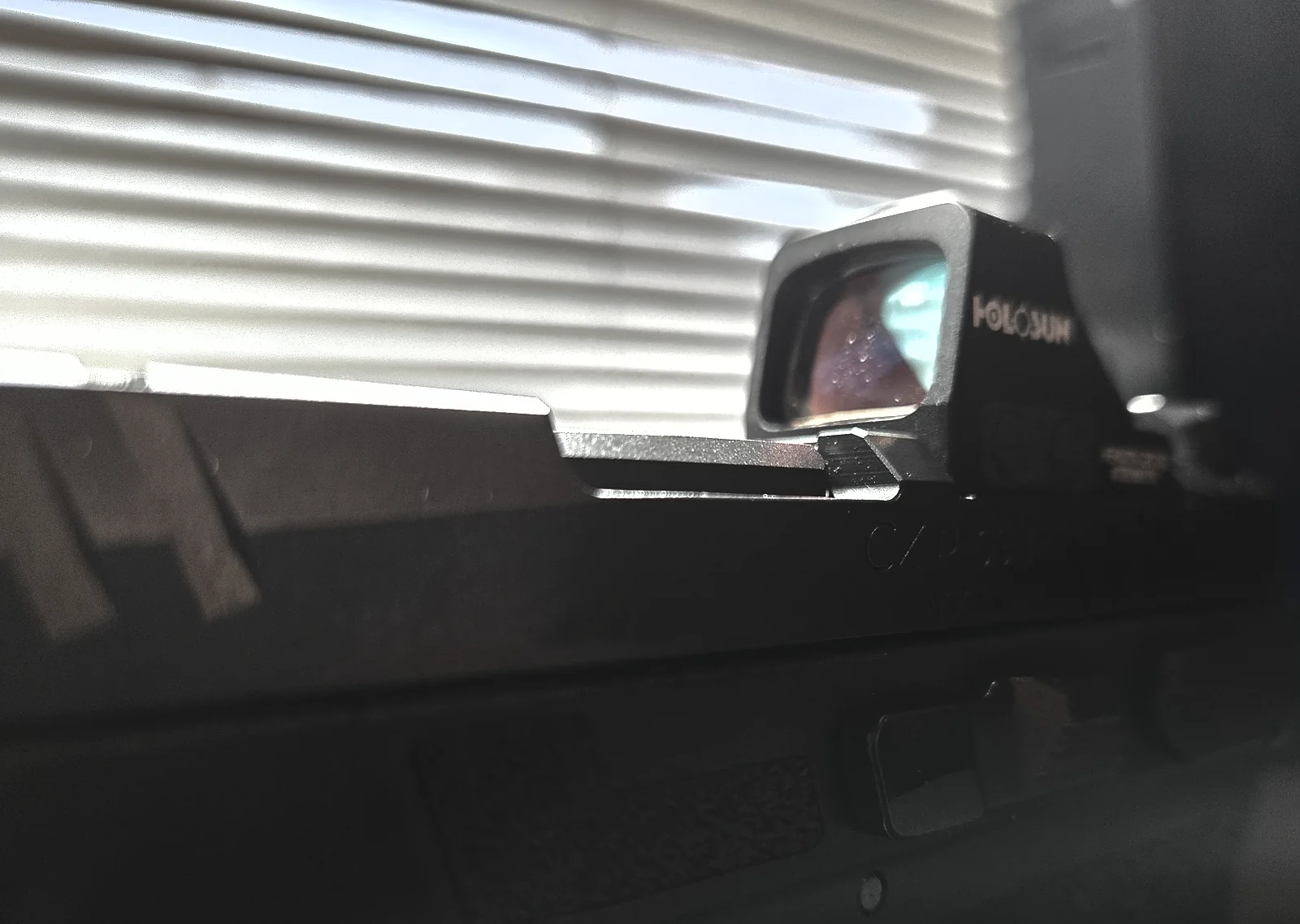
I like big guns and I cannot lie
We don't have a gun control problem; we have a cultural and education problem.
I was waiting for what felt like an appropriate time to write this.
I didn't really know specifically what constitutes appropriate in this case, but I was going mostly on "feeling".. Plus, this is one of the few things I have in my backlog hopper for "I have no idea what to write about".
That's OK for blog posts; Anybody can do it, and unless you've got an outsize level of influence as part of the cultural zeitgiest, you're probably not going to cause too much harm unless you're breaking the law in some way.
With firearms, though, it's different.
Actually, let's clarify: With violence it's different.
Some problems are easy to solve. I knew I'd be lacking in things to write about at times, so I keep notes on various topics I could write about, frequently with basic outlines on what I'll say.
I prepared for the problem, even though it's not complex or high-impact at all. When it comes to violence, however, preparation is a much more complex affair.
I took an Intro to Criminal Justice course while in college; While I learned a lot in that course, the one thing that stuck with me is the proper escalation of violence in response to violence.
I'm going to summarize what was explained to me in that class.
If someone comes at you with their fists - and you can't flee - it's OK to use a bat to defend yourself.
If someone comes at you with a bat - and again, you can't flee - it's OK to use a knife to defend yourself.
If someone comes at you with a knife - and you can't flee - it's OK to use a gun.
It's a bit of a generalization, but there are 2 key aspects to note: Fleeing is always preferred over replying with violence, and you don't immediately jump to pulling a firearm for self-defense unless it's the next-highest level of lethality. I'll also add, just for clarity's sake: Pepper spray is perfectly acceptable for all of the above scenarios.
This only covers self-defense scenarios, however, so let's talk about the raging, white, gun-toting elephant in the room: Mass shooters & spree killers.
While the current US administration would love to pin the bulk of violence on minorities, the reality is that - according to the Rockefeller Instutite of Government (which was exceptionally conservative in the stats out of all the sources I checked) 55 percent of mass shootings since 1966 are committed by white males.
Additionally, according to a study published in 2021 68.2% of mass shooters had a domestic violence history.
In fact, while I was writing this at my local coffee shop the police came in; As it turns out, just around the corner a woman was beaten up by someone about 20 minutes before I inserted this line; Thankfully, a bystander approached to intervene, and the attacker fled.
I have no idea why it happened, or whom it was on either side of the violence, but we can at least see that - in this particular case - just confronting the attacker (unarmed, I'll add) was enough to disuade further violence.
Violence is a complex problem, though, and what worked in this case may not work in others.
A key problem we see, hoewver, is that frequently folks immediately jump to what they perceive as the most effective and accessible means to cause harm: Firearms.
You'll note that I said what they perceive, rather than what is.
This brings me to my key opinion: We have a cultural and education issue as it pertains to violence.
We fetishize the lethality of firearms; Marketing, entertainment and more exemplify the power behind the gun.
Hold on, though, because remember: Violence is a complex issue.
That doesn't mean we have to stop watching violent movies or ban marketing of firearms. Not at all.
While - again - this is a complex issue, I firmly believe one step in helping reduce gun violence is 2-fold.
First: Education. Teach your kids about fantasy vs. reality. Teach them the hiearchy of violence in response to violence. Hell, teach them about firearms.
Second - and just as important - teach them that it's ok to talk to someone about their depression, anger, and all of their feelings.. Which leads into the cultural aspect:
Normalize vulnerability and mental health treatment.
I was in High School when the Columbine shooting happened.
I was a big fan of KMFDM. I wore black a lot. I played video games (including Doom, of course). I owned a trenchcoat. I was depressed, and frequently bullied.
After Columbine, I became a new kind of target. Some of my bullies backed off, assuming I might go off on them for the years of abuse. Others escalated, believing they could "take me out" and be the hero should I ever decide to escalate violence in the school.
Quite obviously I never did anything, and I thank my mother for raising me right. She taught me how to handle bullies. She showed compassion, listened, and more importantly made sure I understood the context of violent media: It's one thing to shoot the bad guy in a video game or in a movie, but it's completely different when you're staring down a real living person in a complex (but seemingly simple) scenario.
I'm now in my 40s. I own multiple firearms. I have fun shooting guns.
I also know that the likelihood of a firearm being an appropriate response - despite being more vulnerable due to disability - to be exceptionally slim.
That's why I keep pepper spray on me, and would rather swing my cane than point a gun at someone.
Sure; someone could pull a firearm on me, but the odds of that happening are rare here.
I have nothing against folks who conceal carry, however.. As long as those same folks also understand that while going lethal is effective, it's not always going to be the most appropriate response.. Especially given the potential consequences of discharging a firearm in a public space.
Let's just say that - despite my respiratory issues - I'd rather walk through a cloud of pepper spray than a hail of bullets that over-penetrate.
And, just to say it one last time:
Violence - and responses to violence - is a complex topic. There is no single easy solution.